Role: Lead UX Researcher & Designer
Client: California Integrated Travel Project (Cal-ITP)
Team: Compiler
Year: 2022-2024
⸻
Overview
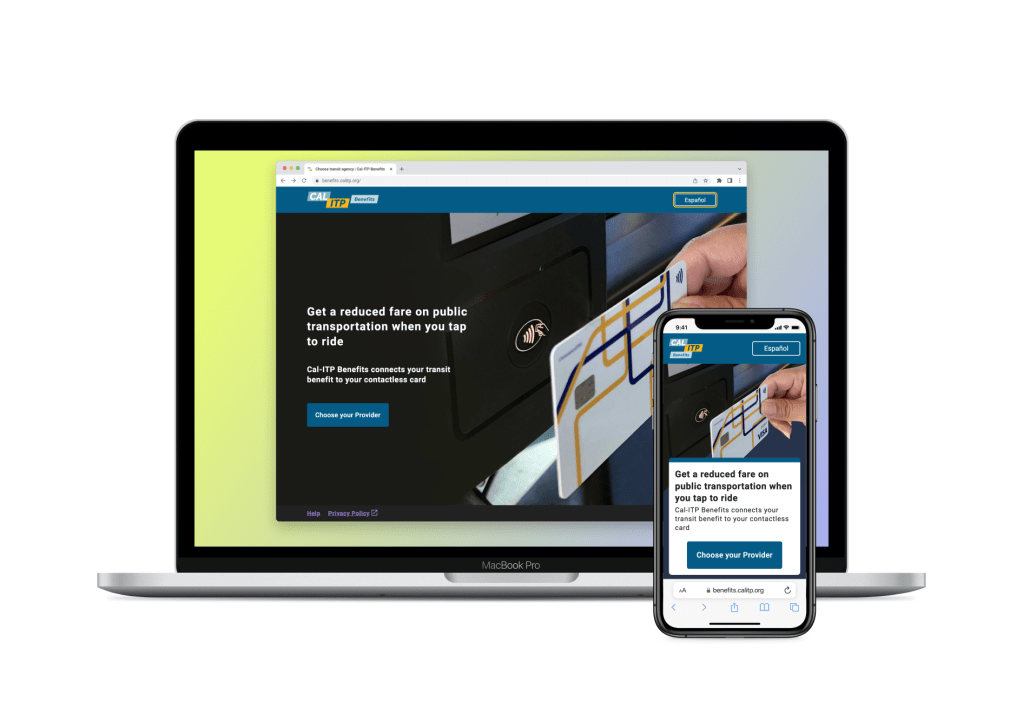
The Cal-ITP Benefits platform was designed to make California’s transit benefits accessible to millions of qualified residents across the state. I led end-to-end UX research, strategy, and design for this statewide effort, shaping product direction through iterative discovery research, user testing, and close collaboration with agency stakeholders and senior leadership at the state level.
⸻
Design Challenges
We had three main challenges to consider with this product
- We had to design for a core user base that receives transit subsidies. These users have disparate needs and included Older Adults, U.S. Veterans, people with disabilities, and Medicare card holders.
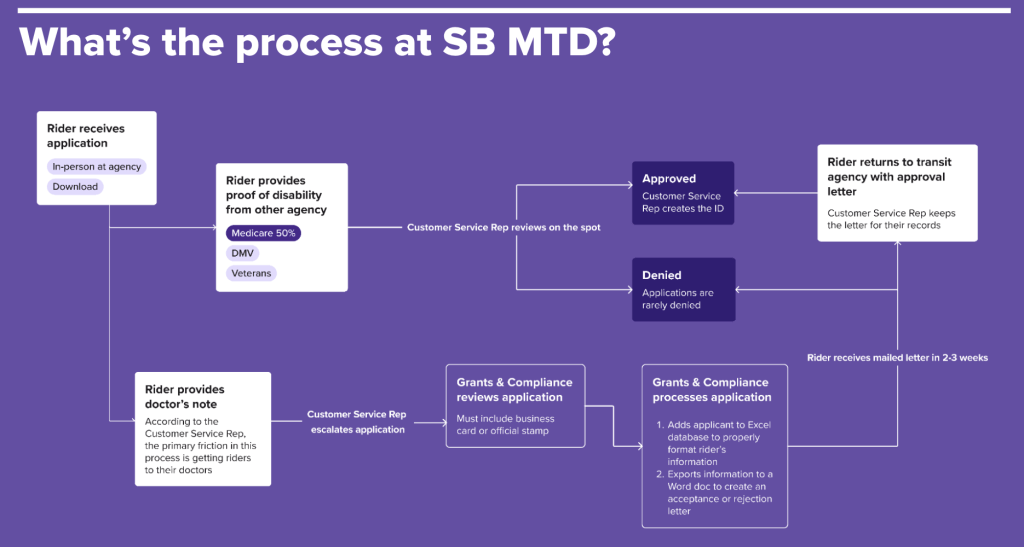
- Transit subsidy programs in California vary from agency to agency and so the experience of applying for a reduced fare for public transportation can be fragmented, confusing, and often requires paper-based applications or in-person visits.
- In order to enroll a user in their transit benefit we had to first verify their identity using a digital identity system. These systems can be complicated to explain to users and difficult for users with low technical skills to complete.
⸻
Approach
Discovery & Research
- I facilitated internal/stakeholder workshops to surface process and alignment needs.
- I brokered a research partnership with login.gov to conduct interviews with Older Adult transit riders across multiple counties (urban and rural). This research was fundamental for our application and was the first user case at the state and local level for their digital identity product.
- I led a small team in conducting a research project alongside login.gov to identify user needs for Older Adults. This work included research design, ops, interviewing, synthesis, and presentation.
- I led my team in analyzing existing transit benefit programs to identify friction points and areas of opportunity for standardizing transit benefits.
⸻
Problem Framing
The team and I synthesized research into design concepts that incorporated key parameters:
- Design for older adults first—this included increasing the size of the text, and increasing the padding for touch targets, such as CTAs. All of the app’s body copy is 18px with 64 pixels between CTAs and any other elements on the app.
- Ensure all copy passes Flesch-Kincaid at the 7th or 8th grade level and that the UX writing caters to a hand-off process wherein users leave the site to confirm their digital identity and then return to the site to enroll in their benefit.
- Reduce cognitive load through progressive disclosure while giving important information upfront
- Transition to a mobile first paradigm
⸻
Iterative Prototyping
Working closely with the engineering team, my design team and I:
- Built high-fidelity screens and functional prototypes based on user research
- Created and ran usability tests with many dozens of participants over ten rounds
- Validated concepts with transit agency representatives and decision makers
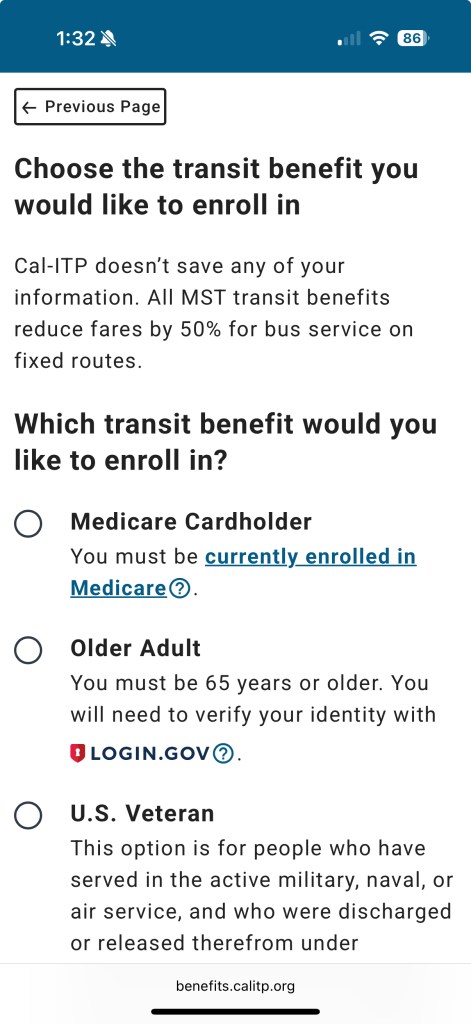
Note, these are three separate enrollment pathways for users to enroll in a reduced fare. Each pathway make use of different digital identity resources
⸻
4. Accessibility
- I transitioned the accessibility workflow from the engineering team to the design team with a robust process.
- I ensured WCAG 2.1 AA compliance everywhere and WCAG 2.1 AAA most places.
- I worked with the engineering team to ensure the app is designed for users with limited internet bandwidth.
⸻
5. Policy and product strategy
- An important part of this project was the creation of policies set by the app for transit agencies. I led my team in researching and developing multiple internal policies for Benefits.
- The research on policies contributed heavily to product strategy, as we chose which pathways toward transit benefit to focus on. For example, the federal government requires local and state transit agencies to offer reduced fares to three main groups in order to receive funding. We strategically focused on nesting those groups into our development timeline based on available APIs and internal policies we could set with the app.
⸻
Outcomes
- Rolled out a unified digital benefits portal currently available to over 16 million Californians in four transit areas.
- The app will serve as the basis for the upcoming disaster relief portal being developed by the state of California.
⸻
Reflection
This project required deep skills in strategy, research, and design. It reinforced the value of clarity in process and consistent communication with my engineering team. I also learned to navigate the world of APIs and digital policy creation.
⸻
Learn More
 Sarah Henry
Leave a comment